
-
Discovery of a beauty-strange particle with unexpected properties
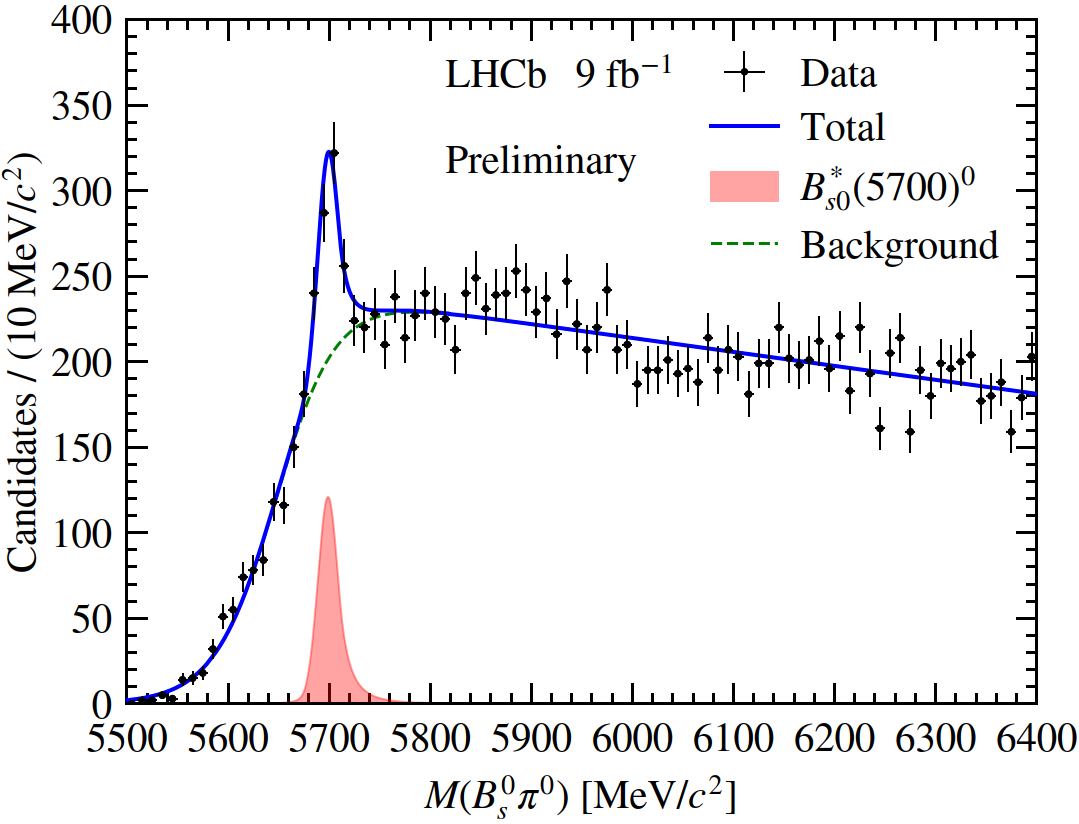
The LHCb collaboration has just reported the observation of a resonance in the Bs0π0 invariant-mass spectrum with a global significance exceeding seven standard deviations at the 43rd International Conference on High Energy Physics at Natal, Brazil, ICHEP 2026. The new particle, Bs0*(5700)0, exhibits a substantial mass deficit and a narrow natural width compared to the…
-
Precision measurement of the B0 and B+ lifetimes
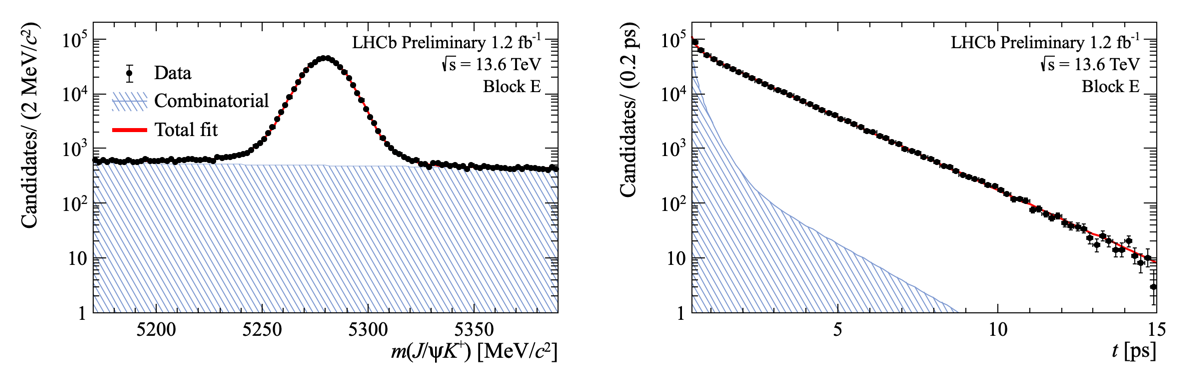
The LHCb collaboration has just reported the measurement of the effective lifetime of the B0 meson in the decay B0→J/ψK*(892)0 and B+ meson lifetime in the decay B+→J/ψK+ at the 43rd International Conference on High Energy Physics at Natal, Brazil, ICHEP 2026. The image above shows the B0 invariant mass spectrum on the left with…
-
Timothy Gershon and Paula Collins – new spokesperson team for the LHCb Collaboration

On 1 July 2026, the management of the LHCb collaboration is changing. The new spokesperson team of Tim Gershon (Spokesperson, University of Warwick) and Paula Collins (Deputy Spokesperson, CERN) will take over from Vincenzo Vagnoni (INFN Bologna), Patrick Robbe (IJCLab) and Ulrich Uwer (Heidelberg University). Tim and Paula will work together in the LHCb management…
-
Observation of the doubly charmed baryon Ωcc+
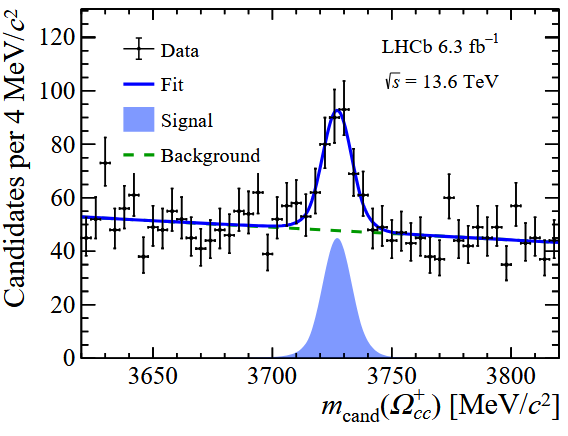
In a major new discovery, LHCb has announced the observation of the doubly charmed Ωcc+ baryon at the Beauty 2026 conference in Maastricht. With this result, the experiment completes the family of doubly charmed baryons and adds a new chapter to a story that stretches back more than sixty years. The Ωcc+ was observed as…
-
Special LHC Low Energy Run – LHCb goes to space
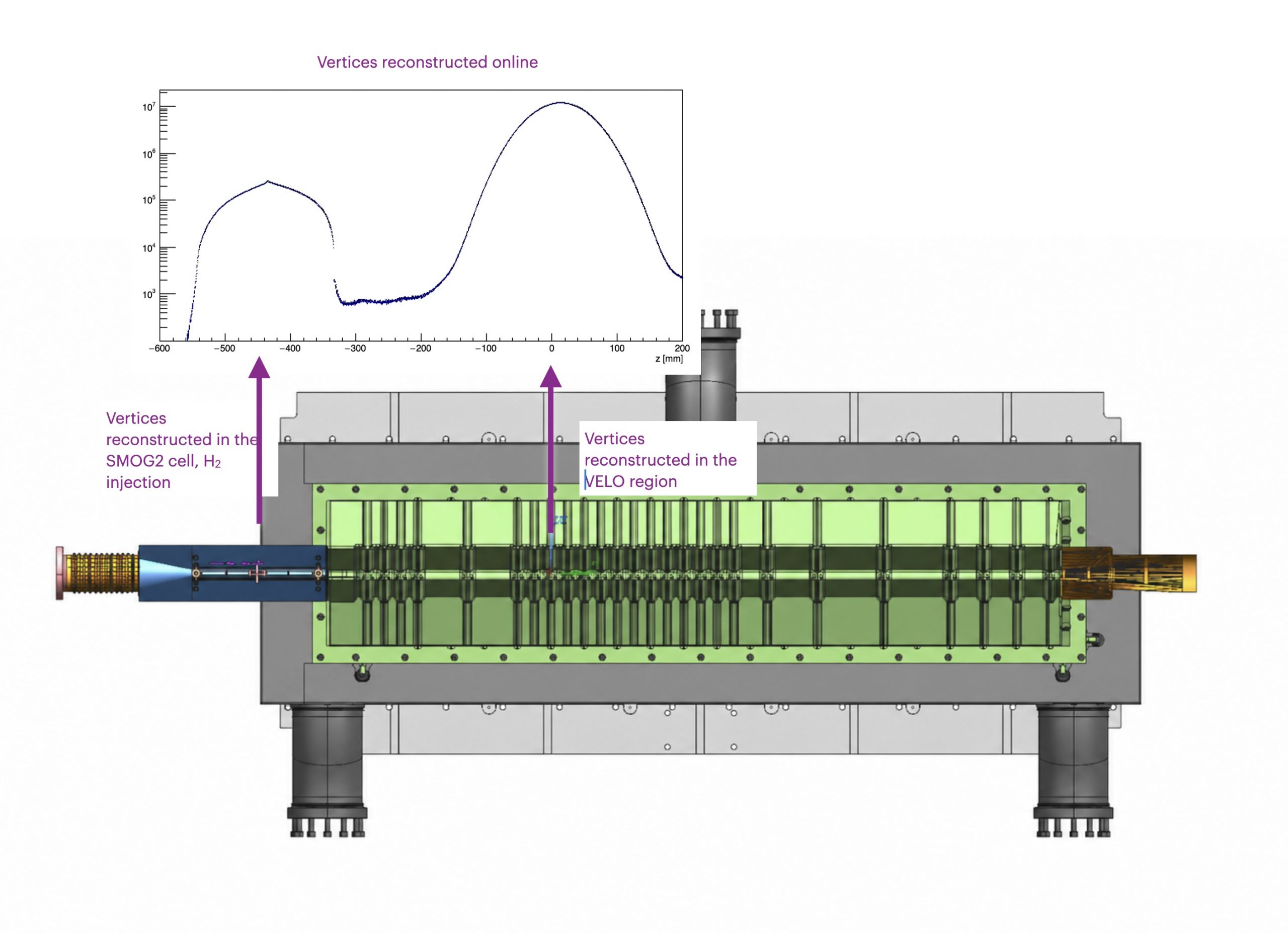
LHCb is celebrating the end of a very strong proton-proton run in 2026, during which the experiment benefitted from the stable and efficient running of the detector and the excellent LHC performance to collect 5.34 fb-1 of collision data. Almost all the data were taken at the highest LHC energy of 13.6 TeV. However, on…